

IN THE DIGITAL AGE we have everything modern technology could offer when it comes to the way our cameras make images. This poses a challenge for those of you who are reading this article – because you have chosen to explore film photography. For this article, I will assume you are going to use a fully manual legacy camera from the 1970’s, 80’s or 90’s, but the same rules will apply to the final generation of (utterly amazing) film cameras which were equipped with autofocus. There are other professionals that might opine that another aspect of Photography might be the best starting point, say composition, or lighting, or exposure considerations or subject choice. All of these are important and when you read my articles, you are reading what my opinions are – take whatever you can use and use it, discard or stow the rest – my opinions are not the final word on anything, other articles may differ about where to start. Focus is my starting point.
The Merriam Websters Definition of FOCUS (as it relates to a visual [phenomenon) is:
“The area that may be seen distinctly or resolved into a clear image.”
Any and all experienced photographers will agree that learning to control focus is an absolute skill that has to be done in camera and cannot be corrected for in the darkroom or in digital post. I say focus control because there are times when you want to defocus or otherwise not have all or part of your image in perfect, sharp focus. An out of focus photograph is no photograph at all, unless being out of focus was the point. Otherwise, the effort you put into setting up the composed photograph, or that moment where something unique happens quickly is simply wasted and your photo is not what you intended it to be.
Because this article is intended to help a digital image creator deal with the demands of transitioning to film, the goal is having your subject in perfect focus. I will leave the creative exceptions to this rule for a later article – and I mean no disrespect to creative and deliberate defocusing. I do it too, creatively and deliberately and occasionally I even get a great defocused one totally by accident.
Here is one I took (deliberately) at the temporary train station at the World Trade Center site in 2006, which combines blur, creative defocusing as well as in focus elements. We will discuss these techniques in later articles.
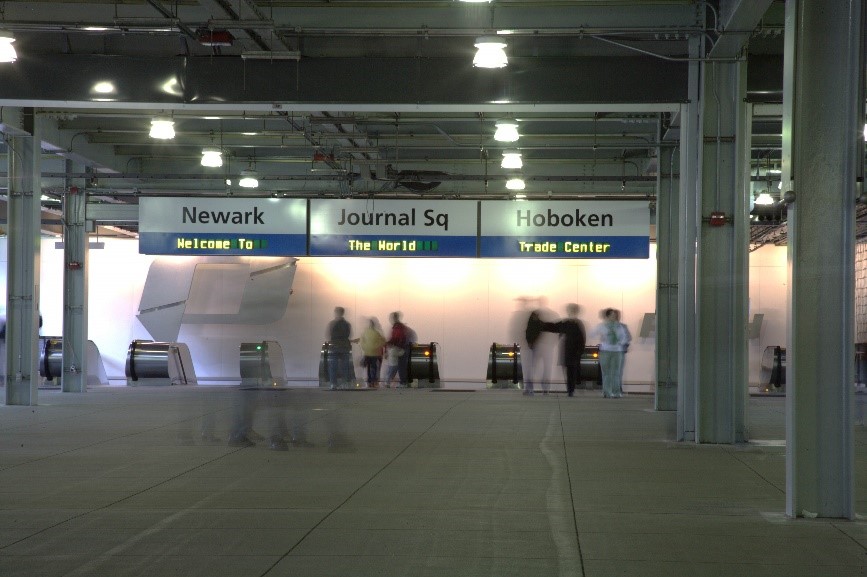
The subjects were of course, the blurred and defocused foreground and people, with the sharpest focus on the signs to give location context.
Here is an example of a simple photograph in excellent sharp focus. Note the defocused background – one of my personal favorite focus control techniques.

And here is an example of poor focusing skills and too much reliance on autofocus, mea culpa!

These images were taken with a 2nd generation digital camera (Canon EOS 1Ds MK II) and a (then) professional quality lens (Gen 1 Canon L Zoom) yes, using autofocus. As you can see from these two photographs taken moments apart, autofocus is not infallible and can still result in an out of focus subject, namely the duck being slightly out of focus while the autofocus locked on the water in front of him. I moved too quickly to take the shot instead of checking the focus a bit more carefully. It could have been a really good photo – but instead is great for an example of what not to do.
Autofocus and Digital have us very spoiled as photographers – because we can check with our camera for focus in two ways – one, line up the autofocus point(s) on your subject in your viewfinder, take the shot, and two, instantly check the result on your image screen. The resulting technique is generally a volume over precision approach. It is a great feature and a great approach because digital cameras have almost unlimited recording ability when it comes to numbers of photos that can be taken in a given time frame, of say an hour or a day. We can just go back and delete the fuzzy ones…. Measure once, shoot 100 times? How many times has that great shot been ruined because the autofocus locked onto the wrong element in the photo?
When you are transitioning to film, however, the idea of volume over precision takes on a whole new meaning. First, each roll of film has to be individually purchased, and second, developed at additional expense. As of the date of this article (December 2025) a careful shopper will still expend over $20.00 on good quality film and negative only processing and scanning. Then there is the lack of instant feedback. By the time you get to review the film image, even if it is digitized at the time it is processed, you are hours or days away from the moment the photograph was taken. Getting poor results is time consuming, expensive and frustrating. Measure twice, thrice, quarce, and then shoot once? It’s a bit tedious but, actually less time consuming and less expensive.
I think the quickest way for new film photographers to get frustrated and say to hell with all this film stuff is due to poorly focused images. The typical volume over precision modern digital era focusing methods are contrary to what is necessary when shooting film, even if you are using an autofocus film camera. With certain photographers and image types aside, we are not taught to be as deliberate with focus control today as was taught in the film age. Again, you cannot effectively fix poor focus in post with any camera, and film has the additional burden of no instant feedback.
Ok so there is the brief history of both. Now lets look at the basics of focus control where you want a sharply focused subject, before you load any film.
Practice manual focusing with your digital camera. Yes, train yourself for your film photography with your digital camera. Most importantly, practice training your eyes, and your hand – eye co-ordination to achieve perfect focus manually and without any autofocus (and autofocusing then manually overriding is cheating!!) Do manual focus photos with your digital until you are able to nail focus precisely, and eventually precisely and quickly. The instant feedback from your digital is the best tool I know for training manual focus. What you will find is that you have taken many less digital shots and thus, your time in post selecting the ones you want to keep will be less.
- A little secret – Until about 1987, Film Cameras were made for manual focus only. The benefit with many film SLR’s is that you get a very precise focusing screen and a split prism to assist you. These features are not found on todays cameras (especially mirrorless), where there is no focusing screen. Manual Focusing with film SLR’s is easier than manual focus with digital in many cases.
Plan your shot(s). I do not care if it’s a carefully composed still life, portrait or landscape, or if it is fast moving animals or sporting events. Plan your shot(s) – you will find having a plan helps you if you need to adjust on the fly or go off plan in the field. If you are not accustomed to planning your sessions/shot(s), learn this subskill, it will save you at least once from a bad session.
Select the best equipment for that plan. I love to haul one or two bodies and several different lenses anytime I go to the field. With film, I set my primary lens as the one best suited for the plan and then bring my additional lenses for what I anticipate as possible alternatives. Interestingly, I do the same with digital but it is not as critical. Or is it? Note – I do not always take my favorite do-it-all lens as my primary even with digital, but I almost always have it in my kit. Same goes for manual lenses, you will have your favorite!
Be very deliberate with focusing. Patience and practice WILL pay off when you get 90% or more of your film shots back with great focus, instead of vice versa. Take your time and nail focus before taking the shot. And don’t get frustrated if your first few rolls of film aren’t the way you want, the good ones will happen.
Remember that learning good focus skills is a process, not an event. You will likely have some focus frustrations with your first few rolls of film. But these will disappear as you practice and become more skilled.
Learning to shoot with film begins with learning excellent manual focusing skills. This will lead to a level of fun, confidence and happiness when you get your negatives back from the processor. All of the other skills you learn in photography rest upon good focusing skills. Next, exposure control, then composition basics. Later, creative focusing techniques and the right equipment for them. Don’t worry, there is no end to this avocation, and everything you learn doing manual will improve your skills with digital.
This swan is one of my recent favorite well focused photos with one of my film cameras. I did not plan my shoot correctly as I did not even know where I was going until I got there. Once I got there, I did plan my shots once I assessed my vantage points, lighting and subjects. Had I planned ahead of time, I would have used Portra 160 or 400, not 800.
This is a friendly, cooperative and used-to-being-photographed swan at Lake Eola in Orlando, Florida. Canon 1vHS, EOS 70-200 f/2.8L IS (Gen 1) Hoya CPL, Kodak Portra 800. I shot this wide open at f/2.8, thus the gradually increased defocused background. This was my first roll of film taken with this truly amazing camera. Processing by Bellows Film Lab, Orlando, and same day processing. This is as shot no adjustments minimal cropping.
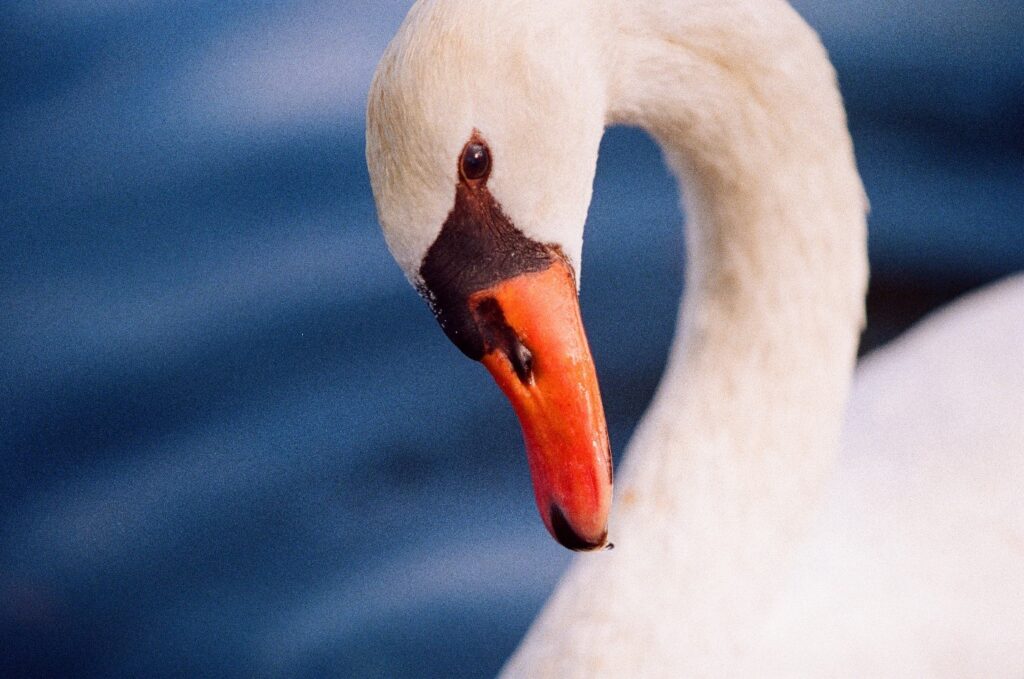
This was Autofocus with Manual Fine Focus. It was one of a several dozen that I took but one of only four that were worth looking at.
Always remember that focus cannot be effectively corrected in post. With Film, I assume we are all digitizing our negatives and color positives for more creative manipulation. Digitizing will not help if focus isn’t exactly as you intended.
PRACTICE PRACTICE PRACTICE. Lastly, the concept of practice is critical. My suggestion is practice manually focusing your digital camera on your subject type – if you are shooting fast moving subjects, practice on moving cars, trying to keep them in focus as they approach, pass and leave your vantage point. I like to use film era lenses on my digital cameras anyways, so this is how I practice on moving targets ahead of a manual focus/film shoot. Once your digital manual focus success rate is over 75%, your film images will be too.
If you “burn in” the concept of perfect focus early on, it will stick with you and it will become a part of your subconscious skill set. This will allow your conscious mind to “focus” on more creative aspects of your image creation.